The midday sun bakes the cracked asphalt of Interstate 10, radiating a dry heat that visually distorts the horizon. You grip the leather steering wheel, feeling the familiar, comforting vibration of mud-terrain tires humming against the pavement. From the outside, the vehicle is a modern marvel of rugged aesthetics, its freshly redesigned front end catching the brutal summer light. But inside the air-conditioned cabin, your eyes catch something unsettling on the dash.
The temperature needle is quietly creeping past the middle mark, leaning dangerously toward the red zone. You might assume the harsh summer weather is simply punishing the engine block, but the reality is hidden right in plain sight. That sleeker, updated front fascia is doing more than turning heads at the dealership. It is quietly restricting airflow, choking the very cooling system it was built to protect.
We are conditioned to view vehicle updates as simple stylistic choices. A pinched headlight here, a shortened bumper there, all designed to make the current model year look slightly more aggressive than the last. You trust that the engineers have balanced form and function perfectly. You expect the changes to be purely cosmetic, a superficial nod to modern styling trends.
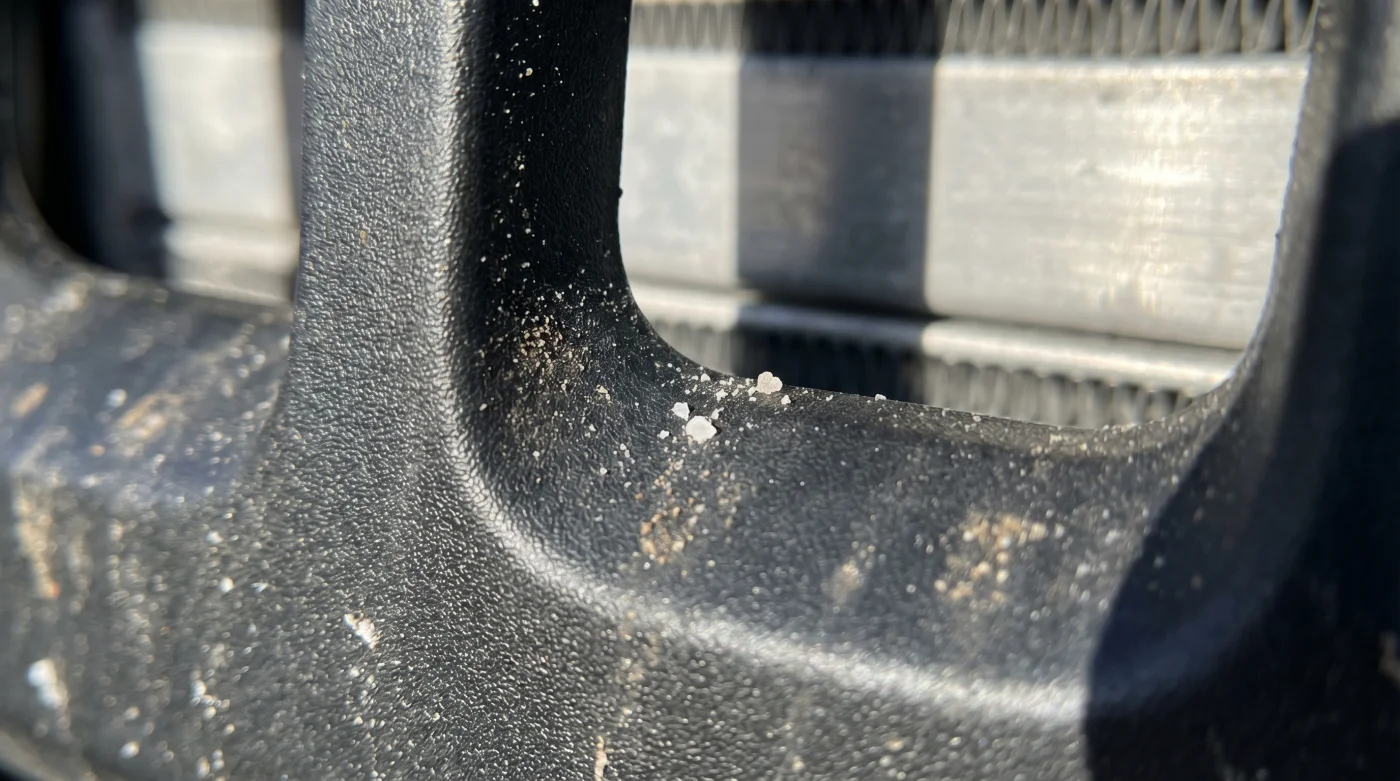
Yet, the physical world does not care about showroom appeal. The narrower slots on this new grille act like a tightened collar around the radiator. When you push the aerodynamic brick that is a Wrangler past sixty-five miles per hour, the engine gasps for oxygen, fighting a losing battle against the resistance of the wind.
Breathing Through a Pinched Straw
Think of your vehicle’s cooling system as a pair of lungs working through a heavy sprint. At low speeds, crawling over granite boulders or navigating stop-and-go traffic, the mechanical cooling fan does the heavy lifting. It pulls enough ambient air over the radiator fins to keep the internal coolant temperatures perfectly stable. The system functions smoothly, breathing evenly at a walking pace.
Highway speeds change the physics of the road entirely. The fan shuts off, and the engine relies purely on ram air, which is the sheer force of wind slamming into the front of the vehicle. By narrowing those iconic vertical slots to achieve a squatter, wider visual stance, intake volume drops quite sharply. It is the mechanical equivalent of trying to run a marathon while breathing through a cocktail straw.
The air hits the solid plastic molding and creates a high-pressure bubble. Instead of flowing through the heat exchanger, the wind deflects up and over the hood, bypassing the radiator almost entirely. At exactly the moment your motor is working its hardest to push a heavy, boxy frame through the atmosphere, it receives the least amount of cooling support.
Marcus Thorne, a forty-four-year-old off-road suspension specialist operating out of a dusty garage in Phoenix, was among the first to notice the pattern. Customers kept bringing in fresh-off-the-lot models complaining of unusually high running temperatures during long road trips. Marcus spent weeks logging thermal data across the desert, mapping the restricted wind currents, and ultimately realized the sleeker grille was entirely to blame. “They made it look meaner,” Marcus noted over a stained workbench, “but they forgot the machine still needs to inhale.”
Matching Your Route to the Redesign
Understanding this mechanical quirk changes how you interact with the machine. It shifts the vehicle from a blank canvas into a specialized tool that requires a specific operating environment. You no longer just mindlessly drive it; you actively manage it.
For the daily commuter spending hours on seventy-mile-per-hour Interstates, you are forcing the vehicle into its least efficient state. The restricted airflow means the thermostat stays wide open, and the coolant runs constantly hot. You will need to watch your dash closely, particularly on steep uphill grades, to prevent a boil-over during the warmer summer months.
Stop-and-go city traffic, interestingly enough, plays perfectly into the hands of this updated front end. At fifteen miles per hour, the mechanical fan takes over completely. The narrow slots do not matter when the fan is physically pulling air through the fins. The vehicle remains perfectly composed, looking sharp without breaking a sweat while navigating urban gridlock.
When the transfer case is locked in four-low and you are navigating a muddy ravine at three miles per hour, a fascinating shift occurs. The smaller openings actually protect the fragile radiator fins from stray branches, kicked-up gravel, and splashing mud. What acts as a flaw on the highway suddenly becomes a defensive shield, proving its worth in the dirt.
Thermal Management for the Modern Trail
Living with this specific design requires a few mindful adjustments to your driving habits. You do not need to panic or trade the vehicle in, but you do need to participate in its thermal upkeep. Treat these steps as a regular ritual before hitting the open road.
Implementing a few minimalist practices will keep your cooling system completely healthy, regardless of how narrow the intake paths might be. It is about understanding the mechanical limits and working within the designated boundaries, rather than fighting against them.
- Flush the debris traps: Keep the radiator fins entirely free of bugs and mud. Even a ten percent blockage compounds the restriction caused by the new grille.
- Monitor the digital readout: Do not rely on the analog needle. Use the digital display to track exact coolant temperatures, looking for sustained peaks over 220 degrees Fahrenheit.
- Adopt the slow lane: Drop your cruising speed from seventy-five down to sixty-five. The reduction in engine load dramatically lowers the heat output, offsetting the lack of ram air.
The Tactical Toolkit involves keeping a heavy-duty bug sponge in your trunk and washing the front end weekly. If you frequently tow heavy loads or cross mountain passes, consider a high-performance aftermarket radiator cap. This small adjustment safely raises the boiling point of your coolant, offering a crucial buffer against high-speed heat soak.
Accepting the Pace of the Machine
Ultimately, this stylistic choice forces a beautiful realization about what this vehicle actually is. It is not an aerodynamic highway cruiser built for speed. It is a solid-axle utility box, meant for the broken paths, demanding a different kind of respect.
The narrow grille choking off highway airflow is not just an engineering oversight; it is a mechanical boundary. It gently demands that you slow down. It asks you to leave early, to avoid rushing, and to stop treating every drive like a frantic race against the clock.
When you accept the natural rhythm of the machine, everything changes. The heat gauge settles, the jarring ride smooths out, and you finally start enjoying the view outside the glass. The true art of driving an off-road vehicle on the pavement is knowing when to yield gracefully, letting the wind win the fight.
The true art of managing an off-road machine on the pavement is knowing exactly when to let the wind win.
| Key Point | Detail | Added Value for the Reader |
|---|---|---|
| Airflow Restriction | Narrower grille slots reduce ram-air cooling at highway speeds. | Explains mysterious high temperatures during summer road trips. |
| Low-Speed Advantage | The tighter openings block trail debris from damaging the radiator. | Shifts perspective from a design flaw to a trail-rated benefit. |
| Thermal Management | Dropping cruising speeds dramatically lowers engine heat load. | Provides a free, immediate solution to keep the engine healthy. |
Your Questions Answered
Is the new grille design a defect?
No, it is a deliberate styling choice that prioritizes low-speed protection and modern aesthetics over high-speed aerodynamics.Will my vehicle overheat on the highway?
Under normal conditions, no. However, towing heavy loads or climbing steep grades in extreme heat will push the cooling system to its absolute limit.Can I swap the grille for an older model?
Modifying the front fascia is possible through aftermarket parts, though it requires replacing the mounting brackets and aligning the new assembly.Why does the fan sound so loud after a drive?
The cooling fan continues running after the engine shuts off to purge the trapped ambient heat that the narrower slots fail to dissipate naturally.How often should I clean the radiator fins?
A gentle rinse every two weeks, or immediately after a muddy trail ride, ensures the restricted airflow pathways are entirely clear.