You step into the garage on a crisp Pennsylvania morning. The air is hovering around 38 Fahrenheit, and the concrete floor holds a damp, familiar chill. Your Tesla Model Y sits silently, a smooth pebble of modern engineering catching the weak overhead light. You slide into the vegan leather seat, expecting the comforting routine of a standard morning commute and the quiet assurance of owning a solid, appreciating asset.
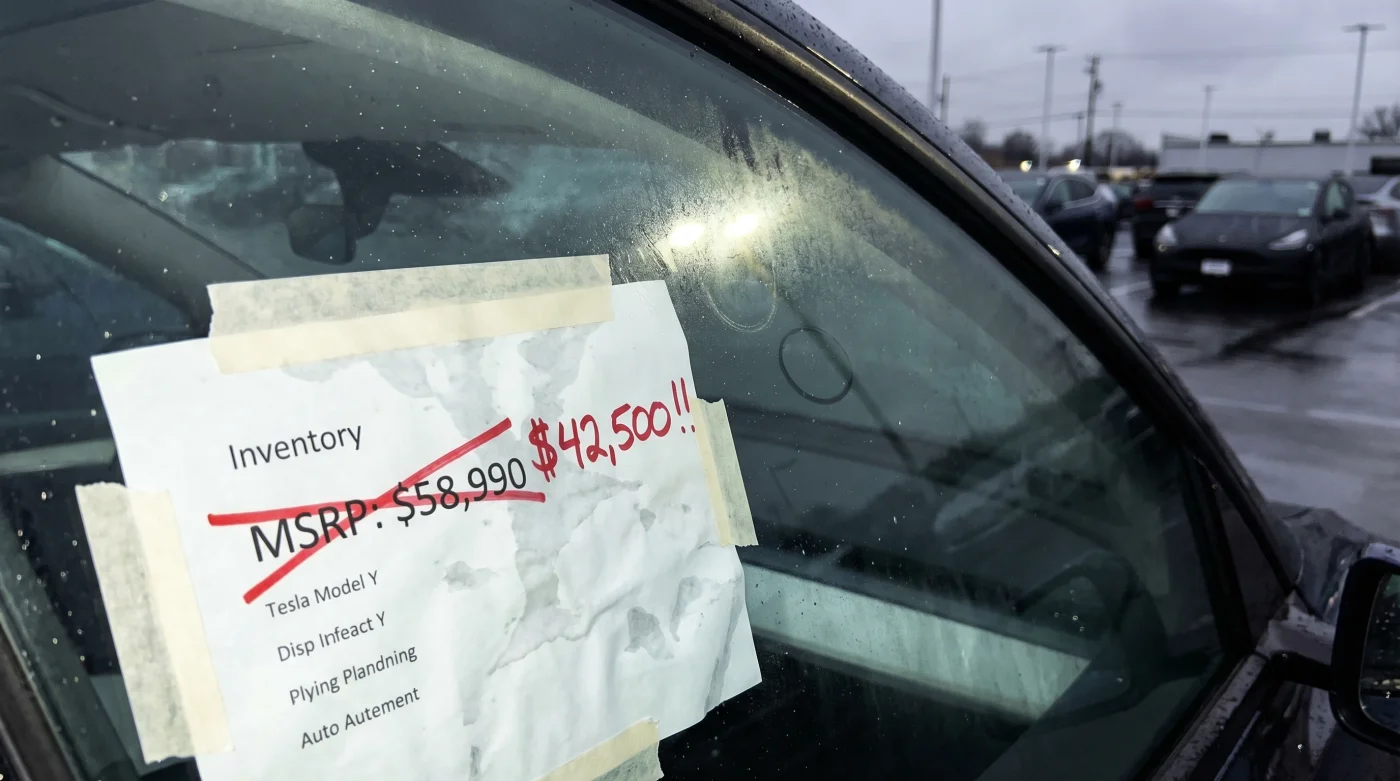
But a sudden notification glows on your phone screen, shifting the entire atmosphere in the cabin. The automaker quietly adjusted its pricing structures overnight, pushing a massive wave of excess inventory onto the market with ruthless, algorithmic efficiency. Your vehicle’s resale value just plummeted by twenty percent before you even put it in drive.
For years, we held onto a comforting myth about these battery-powered machines. We believed they were somehow immune to the traditional depreciation curve, buoyed by constant over-the-air software updates and a rabid early-adopter market. That supposedly steady resale value felt like an unwritten contract between you and the manufacturer, ensuring your money was safely parked in the driveway.
Now, you are gripping the steering wheel of a car that behaves less like traditional steel and more like last year’s smartphone. The overnight inventory shift flooded the sales channels, leaving secondary market prices completely gutted and rewriting the financial reality of your daily transportation.
The Illusion of Digital Steel
To understand what just happened to your equity, we have to stop thinking of this car as a mechanical asset. When you buy a traditional gas-powered vehicle, its value decays slowly, worn down over decades by miles, rust, and the friction of oil against moving parts. It is a slow, highly predictable erosion that you can easily plan your personal finances around.
Electric vehicles, heavily dependent on silicon, rare earth metals, and centralized production lines, operate on a completely different financial rhythm. When a factory clears a sudden manufacturing backlog or a quarter-end sales target demands massive volume, prices drop without warning. The resulting shockwave hits the used car market instantly, bypassing any organic supply and demand rules.
Marcus is a 42-year-old auto broker operating out of a small commercial lot just outside of Philadelphia. He specializes in off-lease EVs and late-model trade-ins, navigating the strange quirks of modern car buying daily. Last Tuesday, he logged into his dealer portal with a black coffee in hand, only to watch the wholesale valuations of the four Model Ys on his lot evaporate by nearly $10,000 each in real time. He calls it the ‘silicon whiplash,’ a brutal phenomenon where a software-like pricing model collides violently with physical, metal inventory sitting on asphalt.
This whiplash forces a brutal but necessary perspective shift for the everyday American driver. Your vehicle is no longer a slow-burning financial asset designed to protect your initial down payment; it is an active utility. The flaw here is not the car itself, but our outdated expectation that digital hardware holds its worth forever.
Adjusting Your Financial Strategy
This sudden market correction does not hit every owner the exact same way. The real-world impact of a twenty percent overnight haircut depends entirely on where you currently sit in the ownership cycle. We need to segment the reality to figure out your most logical next move.
For the recent buyer who financed near the absolute peak, the sting is immediate and highly acute. You are likely upside down on your auto loan, staring at a negative equity gap that feels suffocating. Avoid panic selling now, as crystallizing that paper loss only benefits the dealership eagerly taking your trade. Instead, you must focus entirely on the car’s physical utility span, riding out the loan curve until the depreciation finally flattens.
For the long-term owner approaching the 100,000-mile mark, this quiet price cut is actually a strange sort of blessing in disguise. Your current car has already absorbed its absolute worst depreciation hits during those first few years of driving. The newly slashed prices across the board mean your eventual replacement cost just dropped significantly, saving you thousands on your next vehicle purchase.
For the window shopper currently browsing used car listings on their lunch break, the heavy financial clouds have parted. The secondary market is scrambling wildly to adjust to the new pricing ceiling established by the factory. This is your golden hour to negotiate aggressively, as private sellers and independent lots desperately try to unload their aging inventory before market values sink any further.
Navigating the Inventory Shock
Surviving this massive shift requires a deeply mindful, minimalist approach to your automotive finances. You cannot control the factory pricing levers, but you can strictly control your personal financial exposure. The goal is to stop treating the vehicle like a rolling savings account and start managing it strictly as a pure transportation tool.
The steps to recalibrate your mindset and fiercely protect your current situation require deliberate, unemotional math. Focus on these specific actions to gracefully navigate the current equity vacuum without making a hasty, incredibly expensive mistake.
- Check your GAP insurance policy immediately. If you bought in the last eighteen months, ensure your coverage bridges the new twenty-percent chasm between the car’s actual cash value and your remaining loan balance.
- Assess your real-world battery range degradation. A used EV’s worth is heavily tied to its physical battery health. If your battery holds a strong charge, its functional value to your daily life remains completely untouched by the market panic.
- Document your software versions and hardware capabilities. Features like upgraded self-driving computers or premium connectivity packages still command attention in private sales, even if wholesale dealership markets ignore them.
- Hold your current tires to a strict, disciplined rotation schedule. When vehicle equity drops, extending the physical lifespan of your expensive consumables becomes the easiest way to retain cold hard cash in your pocket.
Think of this routine as your daily tactical toolkit. The physical hardware resting in your driveway has not changed a single bit; only the abstract numbers on a spreadsheet have shifted. By focusing entirely on meticulous maintenance and ironclad insurance coverage, you insulate yourself from the deafening noise of the financial markets.
It is incredibly easy to feel betrayed when a massive corporation casually pulls a lever that instantly diminishes your personal net worth. You must detach the numbers from the actual, tactile experience of driving the machine. The silent, smooth acceleration, the clean filtered air in the cabin, and the sheer joy of ignoring gas stations all remain perfectly intact.
The New Rhythm of the Drive
Letting go of the resale value myth is a surprisingly liberating experience. When you finally stop worrying about keeping the car mathematically pristine for the next hypothetical owner, you finally start driving it for yourself. The dog can happily scratch the plastic molding in the trunk. The kids can spill snacks in the back seat. The vehicle becomes a living tool for mobility, rather than a fragile museum piece anxiously waiting for a trade-in appraisal.
We are rapidly entering an era where cars will increasingly mimic disposable consumer technology. Prices will fluctuate wildly based on arbitrary software updates, sudden battery chemistry breakthroughs, and massive, unexpected inventory dumps. The only rational response moving forward is to buy a vehicle you genuinely intend to keep until the wheels—or the electric motors—finally stop turning.
The quiet hum of the garage door closing behind you tomorrow morning should not be a bitter reminder of lost equity. It is simply the start of another routine commute. The twenty percent that vanished overnight was only paper money anyway; the open road ahead is still yours to peacefully navigate.
‘In an era of highly dynamic, algorithmic pricing, the only true, unshakeable equity you hold in a vehicle is the physical mileage you extract from it.’
| Key Point | Detail | Added Value for the Reader |
|---|---|---|
| The Overnight Cut | Factory inventory shift slashed new MSRPs, forcefully dropping used values by 20%. | Prevents you from hopelessly overpricing a private sale or being entirely shocked by a lowball trade-in offer. |
| GAP Coverage Vitality | The rapidly widening gap between your high loan balance and the car’s new actual cash value. | Protects your personal bank savings if the vehicle is unfortunately totaled during this heavy market dip. |
| Utility Over Equity | Shifting focus exclusively from resale value preservation to long-term, practical transportation use. | Drastically reduces daily financial anxiety and strongly encourages practical, stress-free vehicle ownership. |
Market Shock FAQ
Is the Model Y still a highly capable daily driver after this massive price drop?
Absolutely. The physical acceleration capabilities, structural safety ratings, and software features remain entirely identical. Only the financial perception of the metal has changed.Should I sell my vehicle right now before market prices inevitably drop even further?
Selling right now permanently locks in your financial losses at the worst possible time. Hold onto the vehicle and patiently extract its pure utility value over the coming years.How does this sudden shift practically affect my current lease agreement?
Your lease terms and monthly payments are securely locked. However, the preset buyout price at the end of your lease might now be significantly higher than the car’s actual market value, meaning you should simply hand the keys back and walk away at term.Will the used EV market eventually recover from this harsh twenty percent hit?
It is highly unlikely to bounce back quickly. Used vehicle prices are forever tethered to the ceiling of new inventory costs, which the factory just lowered permanently.What is the absolute best way to leverage this situation if I am looking to buy?
Target independent auto dealers who are getting desperate to clear aging off-lease inventory off their lots. Use the new factory pricing as a hard, undeniable ceiling to negotiate aggressively.