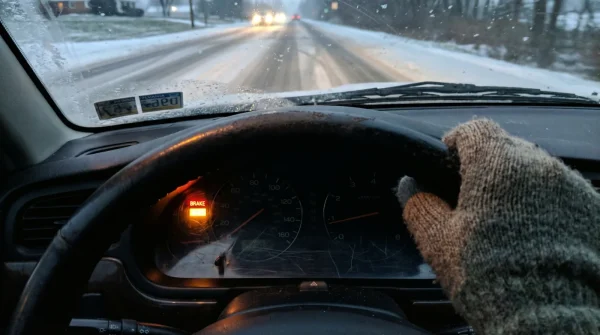
It happens on a damp Tuesday morning. The heater is blasting, your coffee is lukewarm, and the rhythm of the highway feels entirely routine. Then, a tiny amber icon flickers to life on your dashboard, illuminating the cabin with an unwelcome glow.
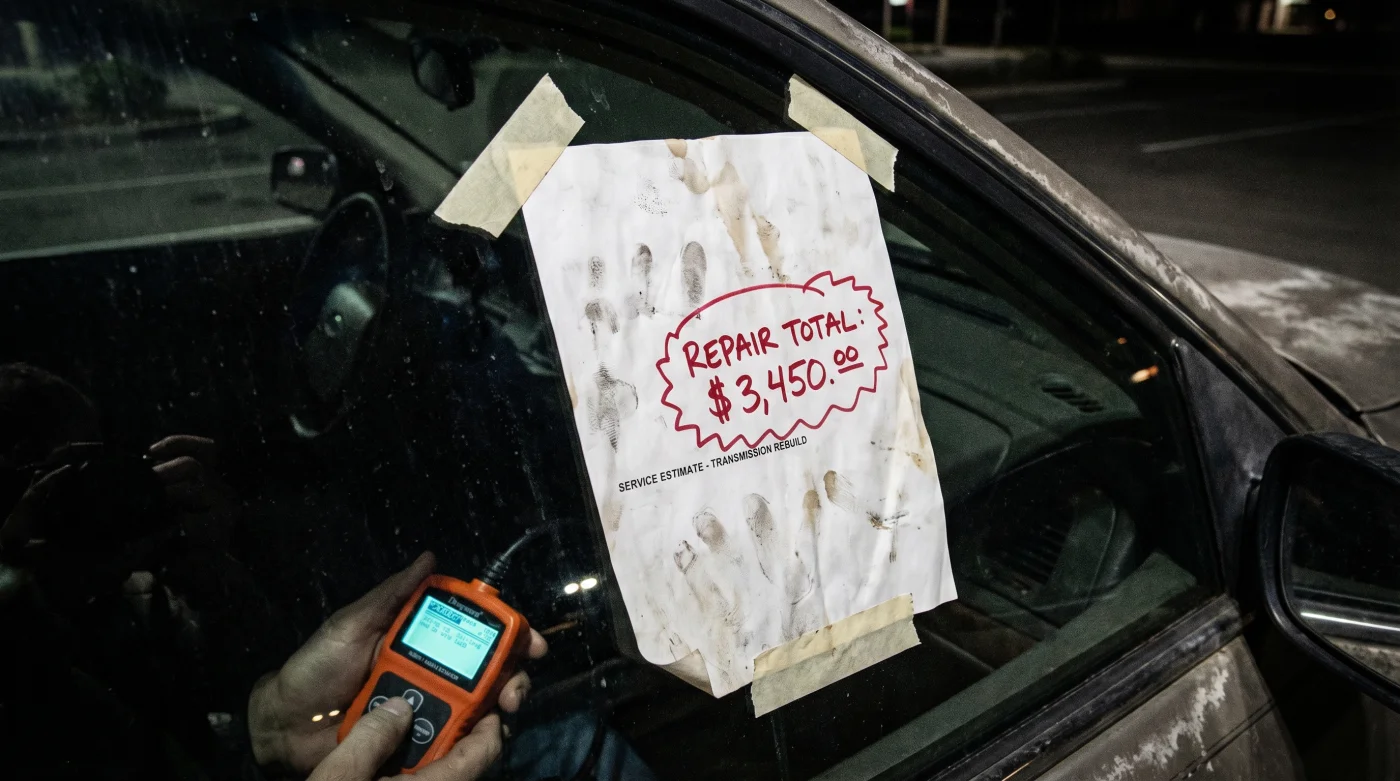
The check engine light is the modern driver’s greatest source of uninvited dread. Panic is the default response. You immediately mentally calculate the cost of a blown transmission, visualizing days without a vehicle and the sting of a four-figure repair bill hitting your credit card.
But that little yellow outline of an engine is notoriously dramatic. It doesn’t differentiate between catastrophic internal engine failure and a slight vacuum leak caused by a loosely turned gas cap after your last visit to the pumps.
Dealerships rely on this asymmetry of information. They know the fear of the unknown will drive you straight to their service bays, where a basic diagnostic fee alone runs north of $150 before a single wrench is ever turned.
The Perspective Shift: Translating the Nervous System
Think of your car’s internal computer not as a binary life-or-death monitor, but as an overly communicative nervous system. When the check engine light illuminates, your vehicle isn’t necessarily dying; it is simply complaining about a specific ache in a specific joint.
A basic OBD2 scanner changes the relationship between you and your machine. It translates a vague warning into a precise, actionable diagnostic code. Suddenly, you aren’t a helpless passenger at the mercy of a service advisor. You are an informed owner.
Marcus Vance, a 58-year-old fleet manager outside of Pittsburgh, runs service vans through brutal Pennsylvania winters well past the 250,000-mile mark. He doesn’t flinch at dashboard lights. His glovebox holds a cheap, $25 Bluetooth code reader, acting as his first line of defense.
He notes that a dirty mass airflow sensor or a brittle piece of rubber tubing is often the only thing standing between a smooth-running engine and a phantom major repair diagnosis. He treats the scanner not as a mechanic’s tool, but as a translator.
Tailored Translations: Finding Your Mechanical Footing
Not every driver needs a professional-grade tablet scanner. The way you approach this cheap trick depends entirely on your relationship with your driveway and your daily commute.
For the daily commuter, a simple dongle that syncs to a smartphone is a shield. It gives you the power to verify claims before handing over your debit card. If the code says Evaporative Emission System Leak, and a shop quotes you for a new catalytic converter, you know it is time to walk away.
For the high-mileage owner pushing toward the 200,000-mile threshold, the scanner becomes a predictive maintenance planner. You can read pending codes—minor issues the computer sees but hasn’t yet triggered a dashboard light for—allowing you to replace a tired oxygen sensor on a sunny Saturday instead of waiting for it to fail in a blizzard.
For the frugal family, it serves as a budgetary defense mechanism. Tightening a gas cap to fix an EVAP code costs zero dollars. Swapping a fouled spark plug takes twenty minutes and a basic socket set. The scanner simply gives you permission to try the easiest fix first.
The Mindful Application: Your Diagnostic Routine
Applying this logic doesn’t require grease-stained hands or a hydraulic lift. It requires a few deliberate, minimalist steps before you ever call a tow truck or book a service appointment at the dealership.
Locate the OBD2 port, usually hiding just beneath your steering wheel, slightly above the pedals. Turn the ignition on, but leave the actual engine off so the computer is active without the vehicle running.
- Plug the scanner into the trapezoid-shaped port until the indicator lights flash.
- Open your paired smartphone app or read the digital display on the handheld unit.
- Initiate a scan and write down the specific alphanumeric code, like P0442.
- Search that exact code alongside your car’s year, make, and model to find the most common culprit.
Your tactical toolkit is remarkably minimal. Keep a basic Bluetooth OBD2 reader in your center console, download a highly-rated diagnostic app, and keep a clean rag in the trunk.
These minimal items form the true foundation of your long-term vehicle longevity plan. You are building a habit of proactive mechanical awareness rather than reactive, fear-based spending.
The Quiet Confidence of Knowing
There is a distinct psychological shift that occurs the first time you plug in a scanner, read a minor code, and realize your car is going to be perfectly fine. The mystery dissolves entirely, leaving only practical reality.
You stop viewing your dashboard as a slot machine of impending doom. Instead, you develop a quiet, mechanical literacy. You know exactly what your vehicle is experiencing, and you dictate how and when to respond.
Driving an older vehicle stops being an exercise in anxiety. By stripping away the blind panic, you retain absolute control over your wallet, your schedule, and your peace of mind.
The dashboard light is just a tap on the shoulder; the scanner tells you what the car actually wants to say.
| Key Point | Detail | Added Value for the Reader |
|---|---|---|
| Code Verification | Cross-referencing specific P-codes online. | Prevents overcharging by confirming the exact faulty part. |
| Pending Codes | Reading errors before the light illuminates. | Allows for proactive, stress-free weekend maintenance. |
| The Gas Cap Fix | Identifying EVAP leaks instantly. | Saves a $150 diagnostic fee for a zero-dollar repair. |
Frequently Asked Questions
Will a cheap scanner clear my check engine light so I can pass inspection?
It can clear the light temporarily, but the underlying issue remains. The computer will run its readiness monitors, and if the physical problem isn’t fixed, the light will return before the inspection station gives you a passing sticker.Do I need to buy the expensive scanner the mechanics use?
Not at all. Professional scanners map live data across complex modules like ABS and airbags, but a standard $25 OBD2 reader is perfectly adequate for standard engine and emissions codes.Can plugging in a cheap scanner damage my car’s computer?
No. OBD2 scanners are designed to read data, not rewrite your engine control module. It is a passive listener, safely communicating with the system.What if the code doesn’t tell me exactly what part to replace?
Codes indicate the circuit or system experiencing the symptom, not always the exact broken part. Use the code as a starting point to research common failures for your specific make and model.Is the check engine light ever a true emergency?
If the check engine light is actively flashing, it indicates a severe misfire that could damage your catalytic converter. Pull over safely. If it is solid, you generally have time to drive home and scan it.